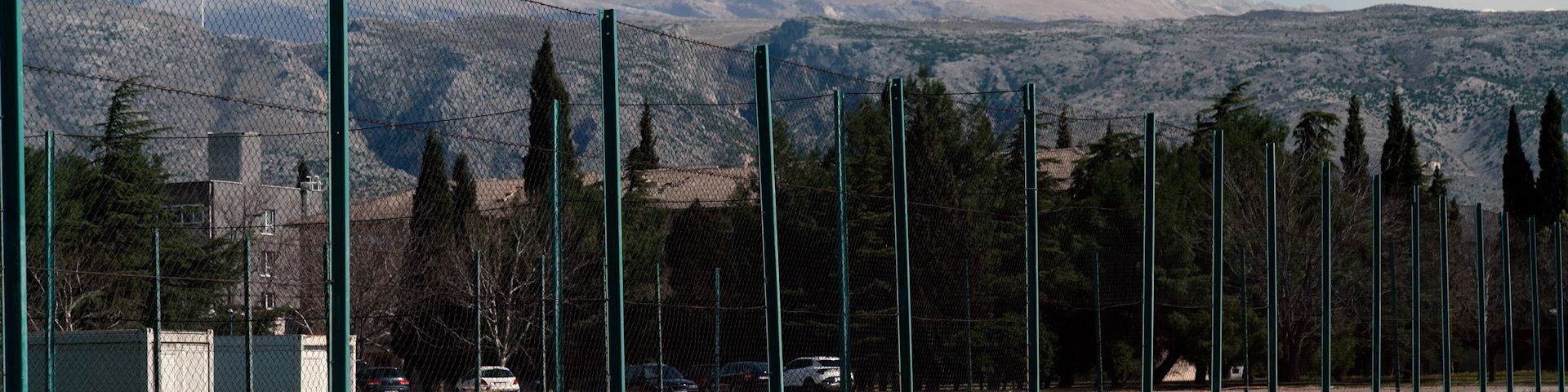
Heliodrom
Rodoč bb, 72000 Mostar1993. – 1994.
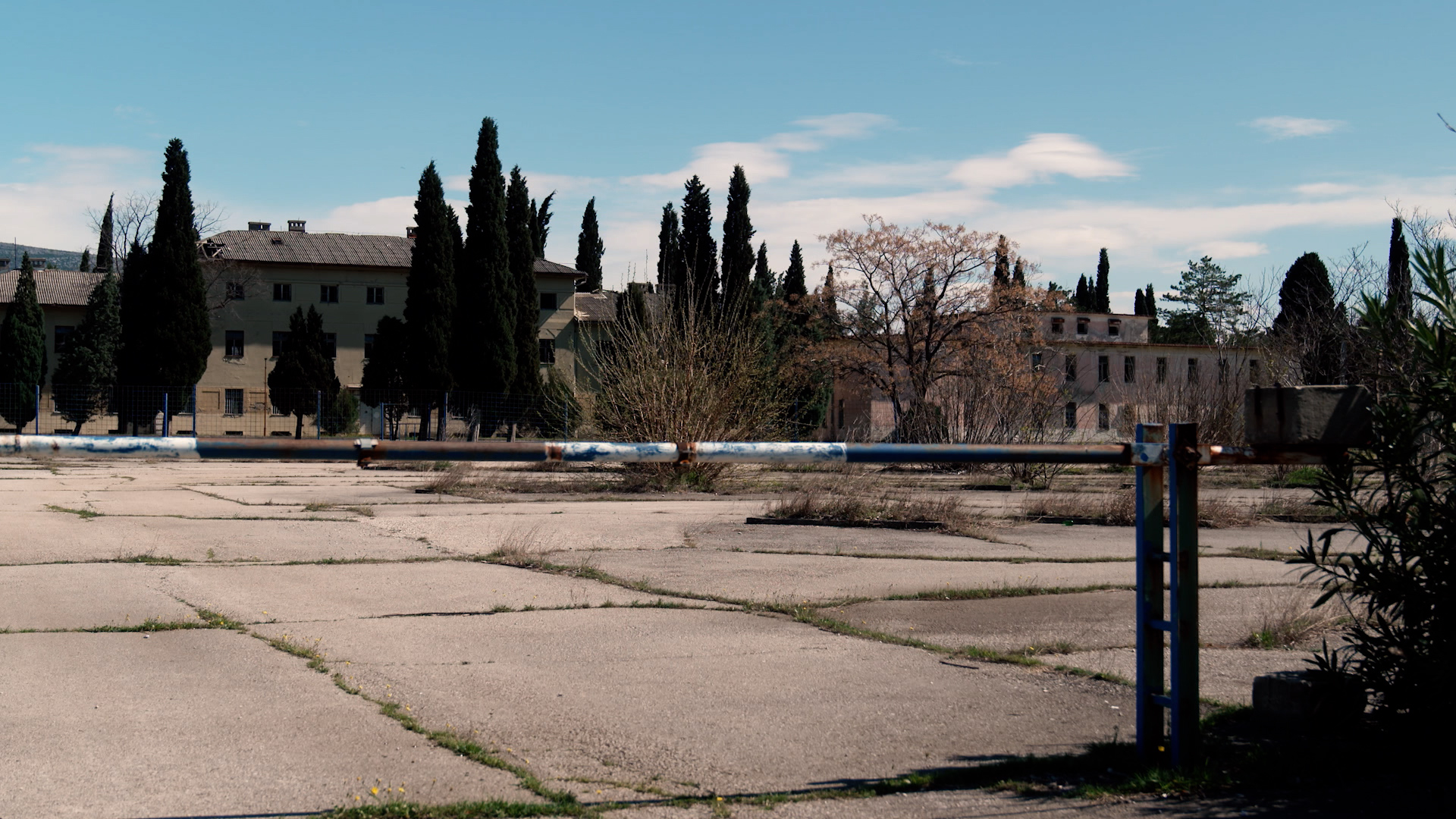
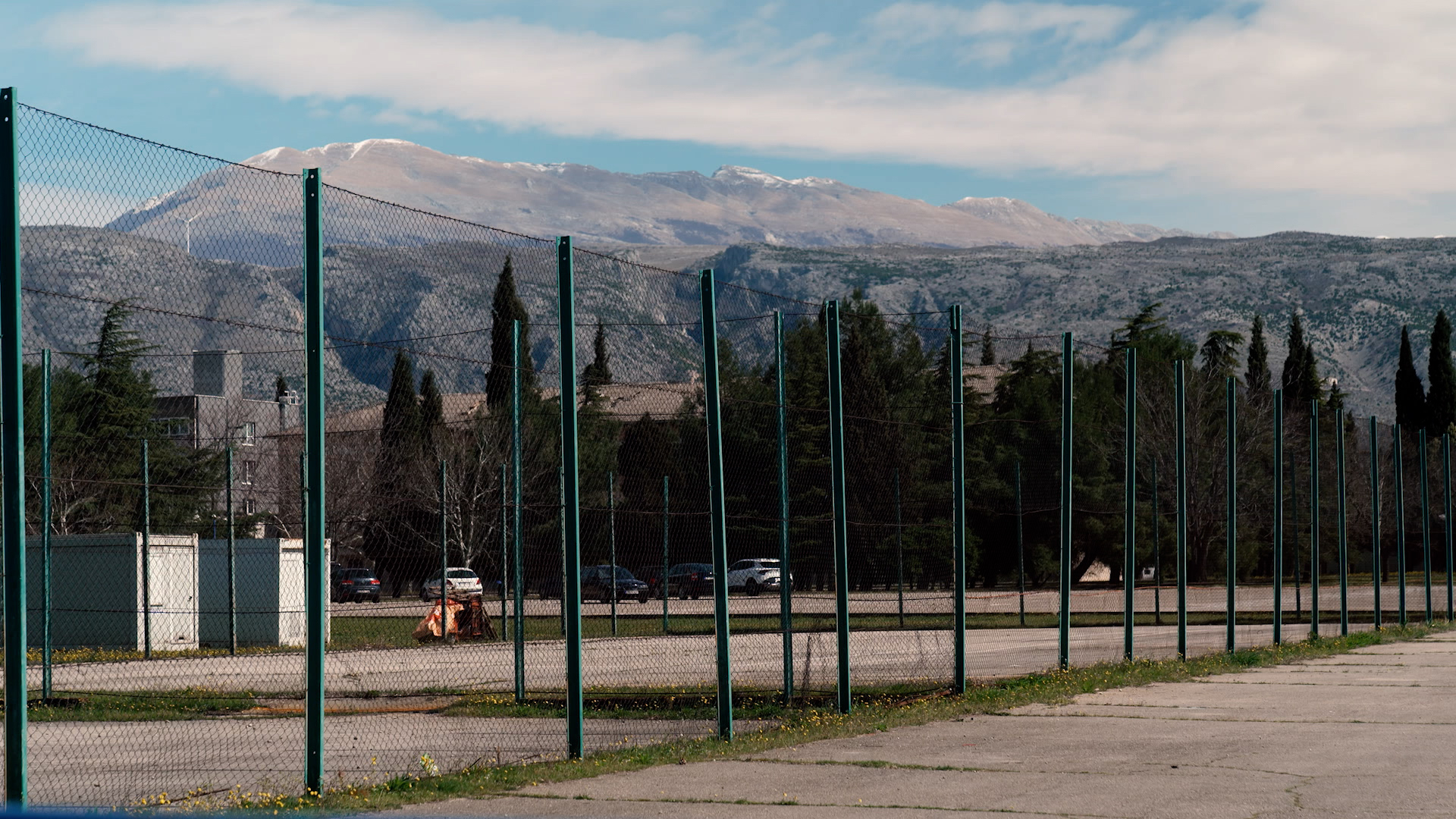
The Heliodrom concentration camp was housed in barracks previously owned by the Yugoslav People’s Army in Rodoč, not far from Mostar. The barracks were turned into a detention centre during the war. Detainees suffered severe bodily injuries, some were forced to beat each other and some were killed.
Court facts
Cantonal Court in Mostar
On May 10, 1993, a major armed conflict between the Croatian Defence Council (HVO) and the Army of the Republic of Bosnia and Herzegovina (ARBiH) occurred in the centre of Mostar around the Vranica building, during which 12 members of the ARBiH were captured. After this, the conflict spread widely across Bosnia and Herzegovina. (Mate Aničić, p. 6.), (Aničić et al., p. 35.)
Civilian detainees and detained members of the ARBiH from Sovići and Doljani near Jablanica and Prozor were taken out of the Heliodrom in late July and early August 1993 and physically abused, causing some of them to lose consciousness. They were also forced to fight each other. (Miroslav Marjanović and Ante Buhovac, p. 4, 31-33.)
Beatings of detained Bosniaks in the Heliodrom camp were also noted at the end of June 1993. (Miroslav Marjanović and Ante Buhovac, pp. 4, 33-35.)
Mistreatment in the Heliodrom camp continued during December 1993, and some of the detainees were seriously injured. (Miroslav Marjanović and Ante Buhovac, pp. 5, 35-36.)
At the end of September 1993, one of the detainees from the Heliodrom was wounded by members of the HVO with a firearm near “Gatačke kuće" in the Rodoč settlement. The man was sent to the hospital for treatment, and later returned to the camp. (Vjeko Kalač, pp. 1-2, 22-26.)
In the autumn of 1993, in the settlement of Kovačine–Bišće Polje, on the front line, there were about 20 prisoners from the Heliodrom camp doing forced labour. One of them tried to escape towards the positions of the ARBiH, but was wounded, beaten, and killed by members of the HVO with firearms. (Bosiljko Kraljević, pp. 2, 57-59.)
ICTY
Between May 9 and 11, residents of western Mostar were taken out of their houses and publicly gathered. The HVO then took hundreds of them to the Velež Stadium, and most of them ended up at the Heliodrom in the Mostar neighborhood of Rodoč. The Heliodrom became the HVO’s main detention centre in the area. (paras. 43., 45-46. Naletilić and Martinović, pp. 17-18.), (paras. 781., 800-805. Prlić et al., volume II, pp. 193, 199-201.)
On May 9, 1993, 1,500 to 2,500 Bosniak civilians were detained in the Heliodrom detention centre, and after a few days the women and children were released. (paras. 42., 45., 47. Naletilić and Martinović, pp. 17-19.), (paras. 780-781. Prlić et al., volume II, p. 19.)
Following the attack by the ARBiH on June 30, 1993, the HVO arrested several thousand Bosniak men in Mostar and the surrounding area, including members of the ARBiH and Bosniak HVO soldiers. The men were detained at the Heliodrom or in the prison in Dretelj. (para. 895. Prlić et al., vol. II, p. 225.)
The detainees at the Heliodrom were beaten and abused, and the violence against them was most intense during May 1993 and the end of June 1993. (para. 429-436. Naletilić and Martinović, pp. 166-171.), (para. 1580. Prlić et al., volume II, pp. 426-427.)
From May 1993 to mid-April 1994, detainees were regularly beaten for several hours, which would sometimes last until the victim lost consciousness. (para. 1591. Prlić et al., vol. II, p. 430.)
One of the detainees was taken from the Heliodrom to one of the military bases on July 12 or 13, where he was severely beaten and abused for several hours, shot dead, and buried in Liska Park. (paras. 487-497. Naletilić and Martinović, pp. 193-196.)
The HVO proposed to the Bosniak men detained at the Heliodrom that they would be released alongside their families in the Mostar area on the condition that they agree to leave BiH and go to another country. At least 800 Bosniaks accepted this proposal. (para. 923. Prlić et al., vol. II, p. 232.)
In early July 1993, the HVO was arresting men, women, elderly people, and children in western Mostar and taking them to the Heliodrom. (para. 1501. Prlić et al., volume II, p. 410.)
In July 1993, Bosniak men from other municipalities in BiH, including the municipalities of Stolac, Čapljina, and Ljubuški, were arrested and taken to the Heliodrom. (para. 1502. Prlić et al., vol. II, p. 410.)
In November and December 1993, there were more than 2,000 detainees at the Heliodrom. (para. 1507. Prlić et al., vol. II, p. 411.)
The prisoners were taken from the Heliodrom to Šantićeva Street, where they built bunkers, repaired trenches, filled and carried sandbags to the line. During this, the prisoners were constantly exposed to crossfire. (para. 295. Naletilić and Martinović, p. 117.), (para. 1596. Prlić et al., volume II, p. 432.)
Prisoners were also used as human shields, and many of them were injured while working in Šantićeva Street. (para. 295. Naletilić and Martinović, p. 117.), (paras. 1622-1628. Prlić et al., volume II, pp. 439-442.)
Four detainees from the Heliodrom were killed and three wounded on September 17, 1993, when the HVO used them as human shields in Mostar. (paras. 1628., 1630., 1633. Prlić and others, volume II, pp. 442-443.)
Dozens of detainees were killed or wounded while performing forced labour on the front line. Some detainees were killed or wounded by HVO forces. It was determined that 27 of them were killed and seven were wounded during the work. (paras. 1603-1605. Prlić et al., volume II, pp. 434-436.)
Detainees were beaten while working on the front line, or in bases of military units in Mostar. (paras. 270., 439. Naletilić and Martinović, pp. 74, 172-173.), (para. 1609. Prlić et al., volume II, pp. 436-437.)
From July to December 1993, detainees were forced to leave Bosnia and Herzegovina with their families and to go, at least initially, to Croatia, and later to third countries. (paras. 1650., 1654. Prlić et al., vol. II, pp. 448-449.)
During the period from August 1993 to January 1994, detainees were also sent to the Vojno detention centre and were detained there. (para. 1669. Prlić et al., vol. II, pp. 451-452.)
After their release, 200 detainees remained at the Heliodrom, the last of whom were finally released on April 18 or 19, 1994. (para. 1633. Prlić et al., vol. II, p. 450.)
Court of Bosnia and Herzegovina
A large number of those arrested on the western side of Mostar ended up at the Heliodrom in the Rodoč settlement, which became the main HVO detention centre in the area, having previously been JNA barracks consisting of several buildings and a hangar. (para. 180. Marko Radić et al. Appeals Judgement, pp. 74-75.)
Some of the men were taken to the Heliodrom in late May 1993 and transferred and detained at other locations. (paras. 146-158. Velibor Bogdanović, pp. 47-49.)
A large number of detainees at the Heliodrom were brought to work on the front line around Ričina and Šantićeva Street from mid-July 1993 to February 1994, where they were exposed to crossfire and mistreatment. This resulted in deaths and injuries due to physical abuse. (paras. 80., 95-96., 103. second-instance verdict of Mile Puljić, pp. 37, 43-44, 47.)
In September 1993 – during the transport of about 50 detainees, who were tied to each other, from the Heliodrom camp to the Vojno camp for forced labour – one detainee was killed while another was wounded. Later another detainee from the Heliodrom was killed. (paras. 345-356. second-instance verdict Marko Radić et al., pp. 104-107.)
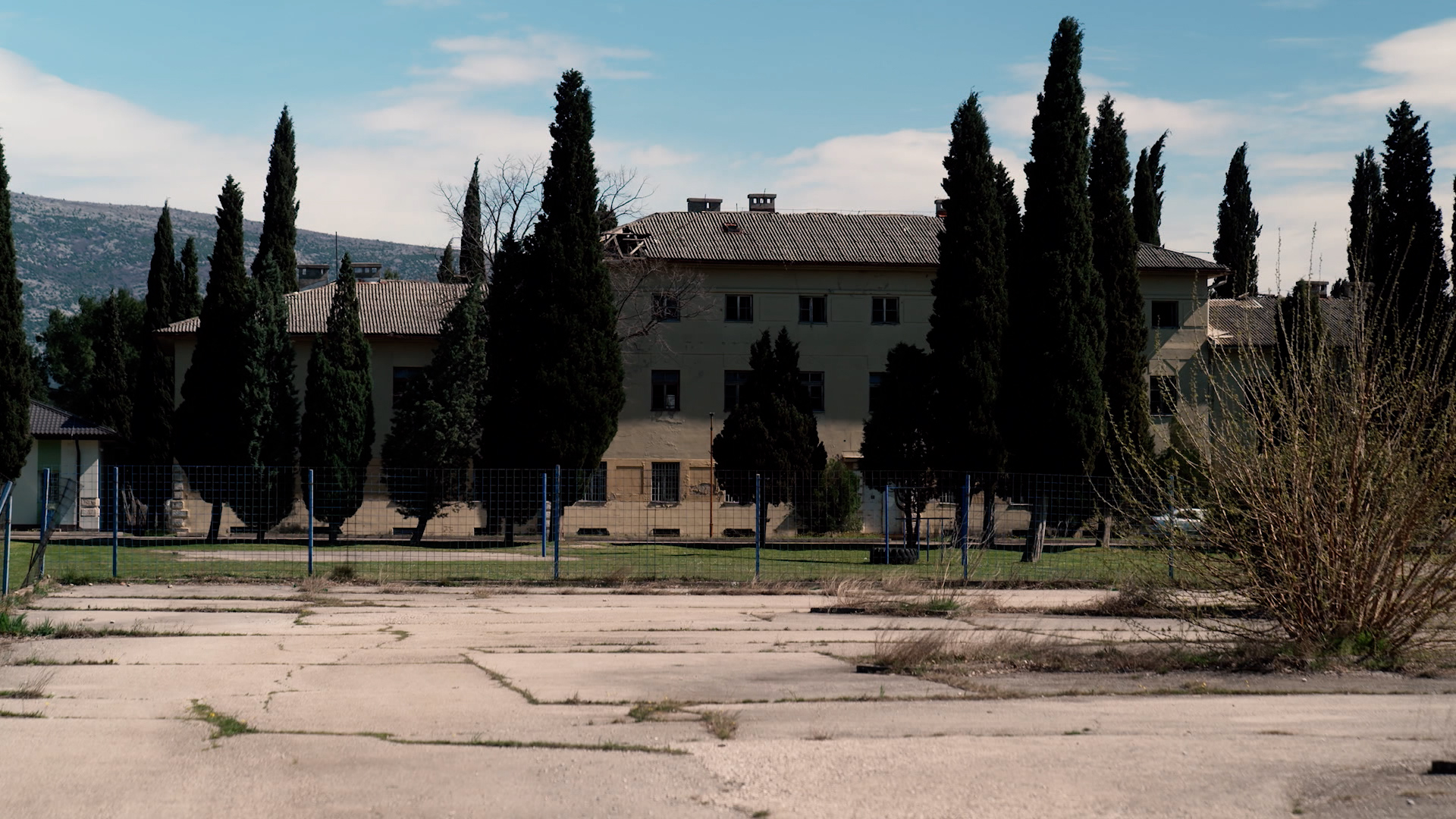
The hardest part of Emir’s life was shaped by his time in the “Heliodrom” camp, through which he passed along with several thousand others. Today, he sees a military museum being built there for the Croatian Defence Council, the same formation that detained him in this camp, while former detainees are denied dignified commemoration and access.
Emir Hajdarović — “Heliodrom”, Mostar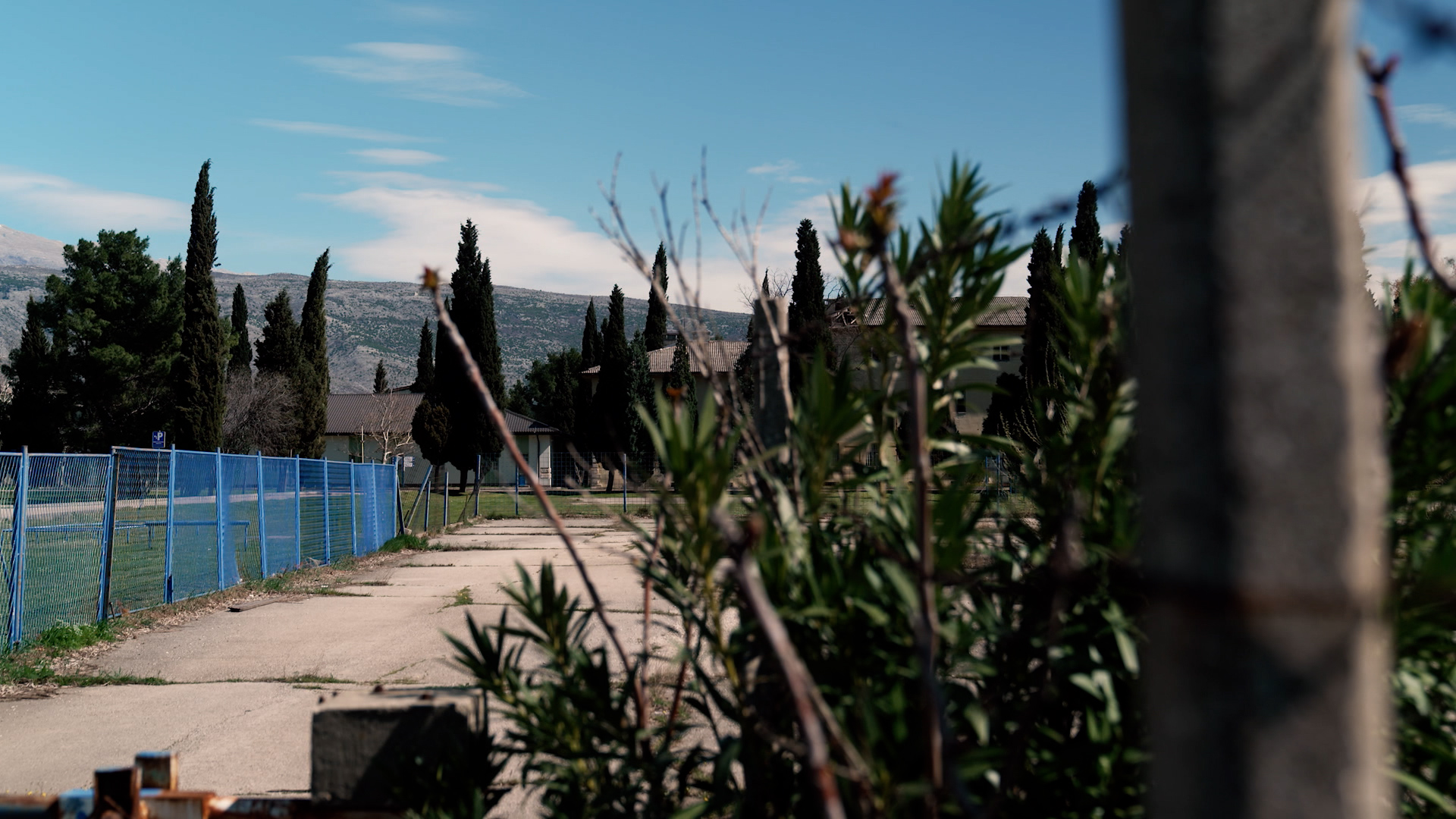
Related content

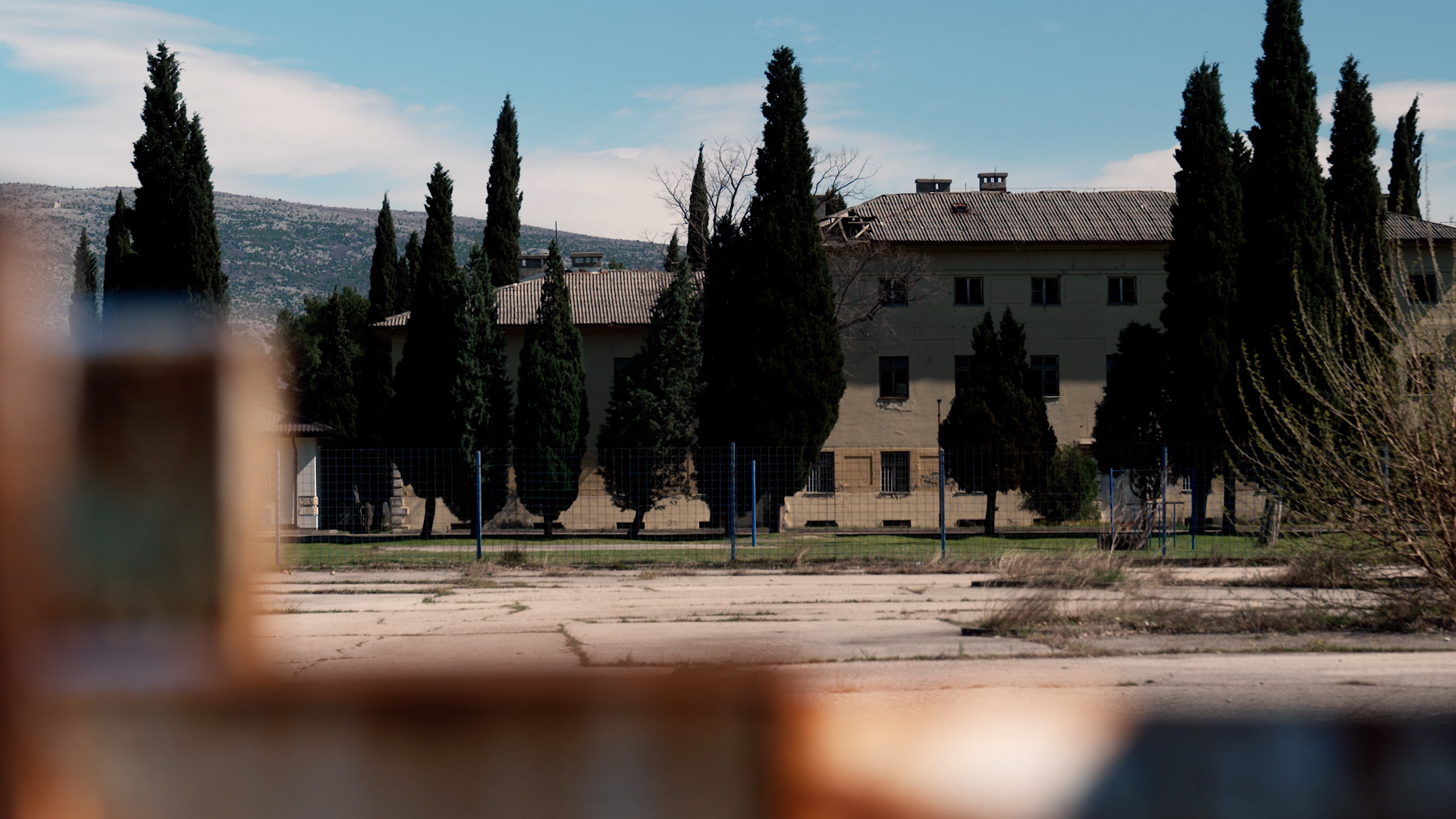
Heliodrom
Rodoč bb, 72000 Mostar