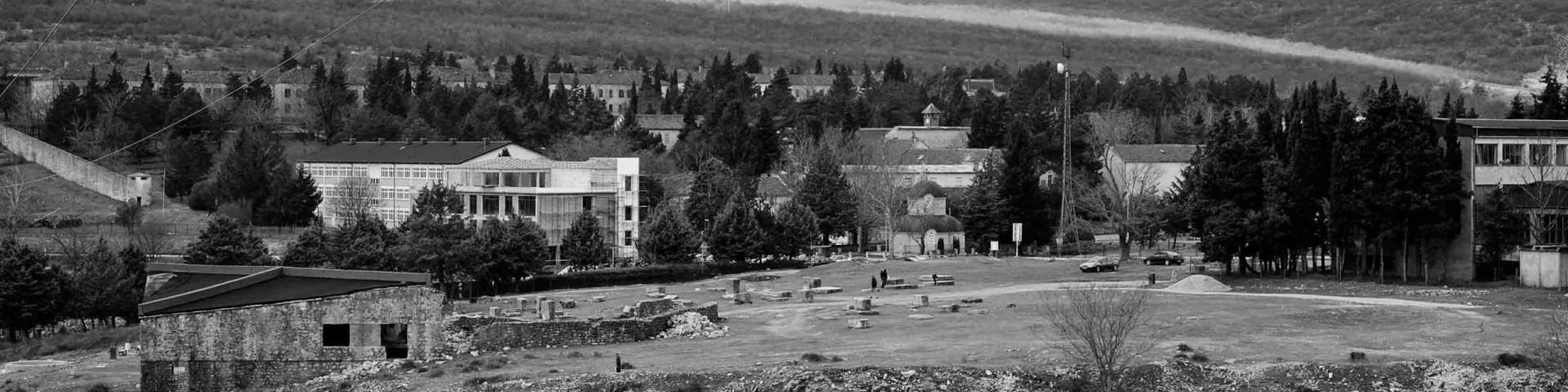
Barracks Moša Pijade
Srpske vojske bb, 89230 Bileća1992
Bosniaks from Bileća were detained in this facility starting in the spring of 1992. Police officers from Bileća, who were responsible for this detention centre, held detainees in inhumane conditions without medical care and without enough space, food or water.
Court facts
ICTY, District Court in Trebinje, and the Court of Bosnia and Herzegovina
In January 1992, all police officers in the Bileća Municipality were ordered to wear insignia indicating their loyalty to the nascent Republika Srpska. Bosniak police officers who refused to do so were dismissed. Many more Bosniaks were dismissed during 1992. (para. 608. Krajišnik, p. 224.)
Even before April 1992, Bosniaks in Bileća were intimidated by the Serb population, many of whom were carrying weapons. Checkpoints were set up throughout the municipality and restrictions were imposed on the movement of Bosniak residents. (para. 608. Krajišnik, p. 224.)
The detainees in Bileća were held in five detention centres (the Moše Pijade barracks, the Bileća police station, a building behind the police station, the Bileća prison, and a student dormitory). Police officers from Bileća, who were in charge of these detention centres, kept the detainees in inhumane conditions without enough space, food, water, or medical care. (para. 969. Stanišić and Župljanin, vol. I, p. 313.), (paras. 609-612., 797-799. Krajišnik, pp. 224-225, 288-289.)
Bosniaks who were detained in Bileća were tortured, subjected to other inhumane acts, forcibly transferred and deported, and their property was looted by Serb forces. (para. 981. Stanišić and Župljanin, vol. I, pp. 316-317.)
The victims of the crimes did not actively participate in hostilities, and the detainees were civilians. (para. 974. Stanišić and Župljanin, vol. I, p. 315.)
Within the Moše Pijade barracks in Bileća, the Yugoslav People's Army (JNA) established a military prison in late 1991, which was later used as a detention camp through which a large number of detainees, mostly non-Serb civilians from the areas of Mostar, Nevesinje, Gacko, and Stolac, passed from May to August 18, 1992. (para. 336. Boris Bošnjak and others, pp. 119-120.)
Dozens of civilians were held in inhumane conditions, subjected to mental and physical abuse, and inhuman treatment. (paras. 336., 370-371. Boris Bošnjak et al., pp. 119-120, 128-129.)
The detainees were held in stuffy, overcrowded, and airless rooms with extremely little food or drinking water. They were unable to use the toilet as needed and did not have adequate medical care. (para. 385. Boris Bošnjak et al., p. 133.)
The conditions in this camp resulted in the deaths of at least four detainees who were brought to Bileća in poor condition. Beatings occurred in the barracks. (paras. 396-398. Boris Bošnjak et al., pp. 7-8, 136.)
The detainees were beaten upon arrival at the barracks. When they got off the truck upon arrival, they were usually greeted by a gathering of soldiers and the mistreatment continued inside the facility. (paras. 625-631., 712. Boris Bošnjak et al., pp. 12, 204-206, 232)
The beatings of the detainees were carried out in and in front of the rooms where they were staying, and when leaving and returning from the toilet. The guards hit the detainees indiscriminately on all parts of their bodies using their fists, feet, and batons. This undoubtedly caused severe physical pain as well as psychological pain, both for those who were being beaten and for detainees who had to watch and wait for the moment when it would be their turn to be beaten. This led detainees to fear for their lives and to suffer severe psychological pain due to the constant expectation of whether they would also be beaten. (paras. 399., 712. Boris Bošnjak et al., pp. 7-8, 136-137, 232.)
After a beating, one of the detainees was injected with a white liquid of unknown content in the chest, in the area below the heart, and his hand was burned with a lighter. Another detainee, who was beaten on several occasions, was forced to have sexual relations with a mentally ill woman who was in the barracks and whom they mistreated and abused. When the detainee refused, the guards hit him in the head. (paras. 425., 427., 441-445. Boris Bošnjak and others, pp. 8-9, 143-145, 151-153.)
After being hit on the head and other parts of the body with a baton, some detainees were tortured with an electric prod. (paras. 539., 559., 667., 696. Boris Bošnjak and others, pp. 9-14, 178, 184, 217, 226.)
A detainee who was beaten for at least 10 days in a row in July 1992 in this facility suffered a broken bone in his head from a blow to the temple with the handle of a pistol. (para. 476. Boris Bošnjak et al., pp. 9, 162.)
After being beaten continuously for 15 days, one detainee was taken outside where he was beaten again and ordered to stand in front of a wall while a fake firing squad gave the detainee the impression he was about to be shot. (paras. 564-570. Boris Bošnjak et al., p. 11., 185-187.)
One detainee was severely beaten in August 1992 after giving an interview about his stay in the camp. (para. 605. Boris Bošnjak et al., pp. 11-12, 197.)
During the beating of one detainee, a shot was fired from a pistol which wounded another detainee. (paras. 501-503. Boris Bošnjak et al., p. 168.)
A non-Serb civilian who was detained in the basement of the Moše Pijade barracks was physically abused and beaten with a baton by members of the Army of Republika Srpska in June 1992. (N. Dž. pp. 1-2, 5-7.)
The Moše Pijade barracks imprisoned non-Serb civilians. (N. Dž. pp. 1-2, 5-7.)
During the summer of 1992, Mustafa Omanić was among a group of detainees held in overcrowded basement rooms in the “Moša Pijade” barracks in Bileća, enduring unbearable heat. Hunger and threats of slaughter were part of daily life until they were exchanged from a site where today there is no sign that it was once a detention centre.
Mustafa Omanić — “Moša Pijade” barracks, Bileća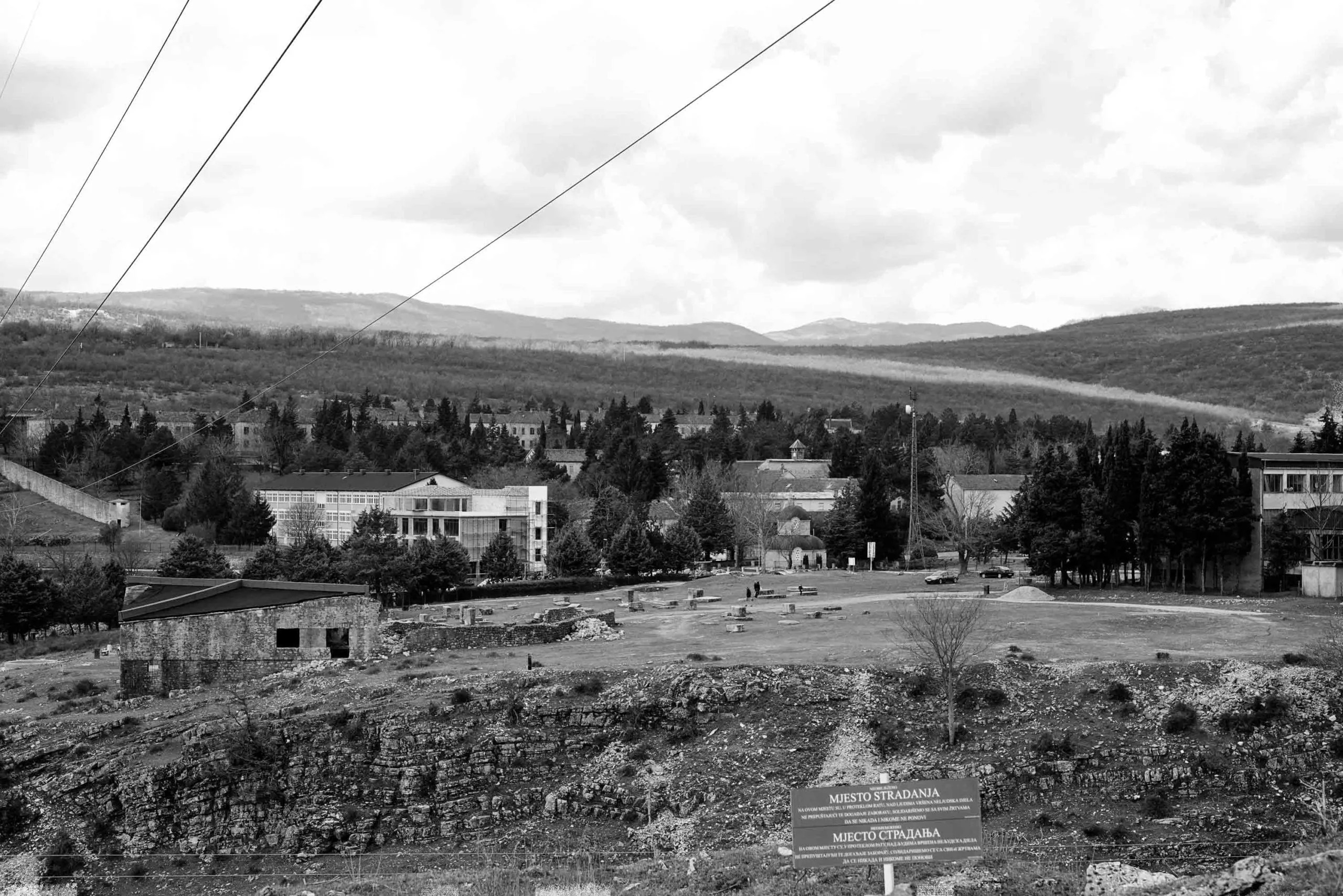
Related content

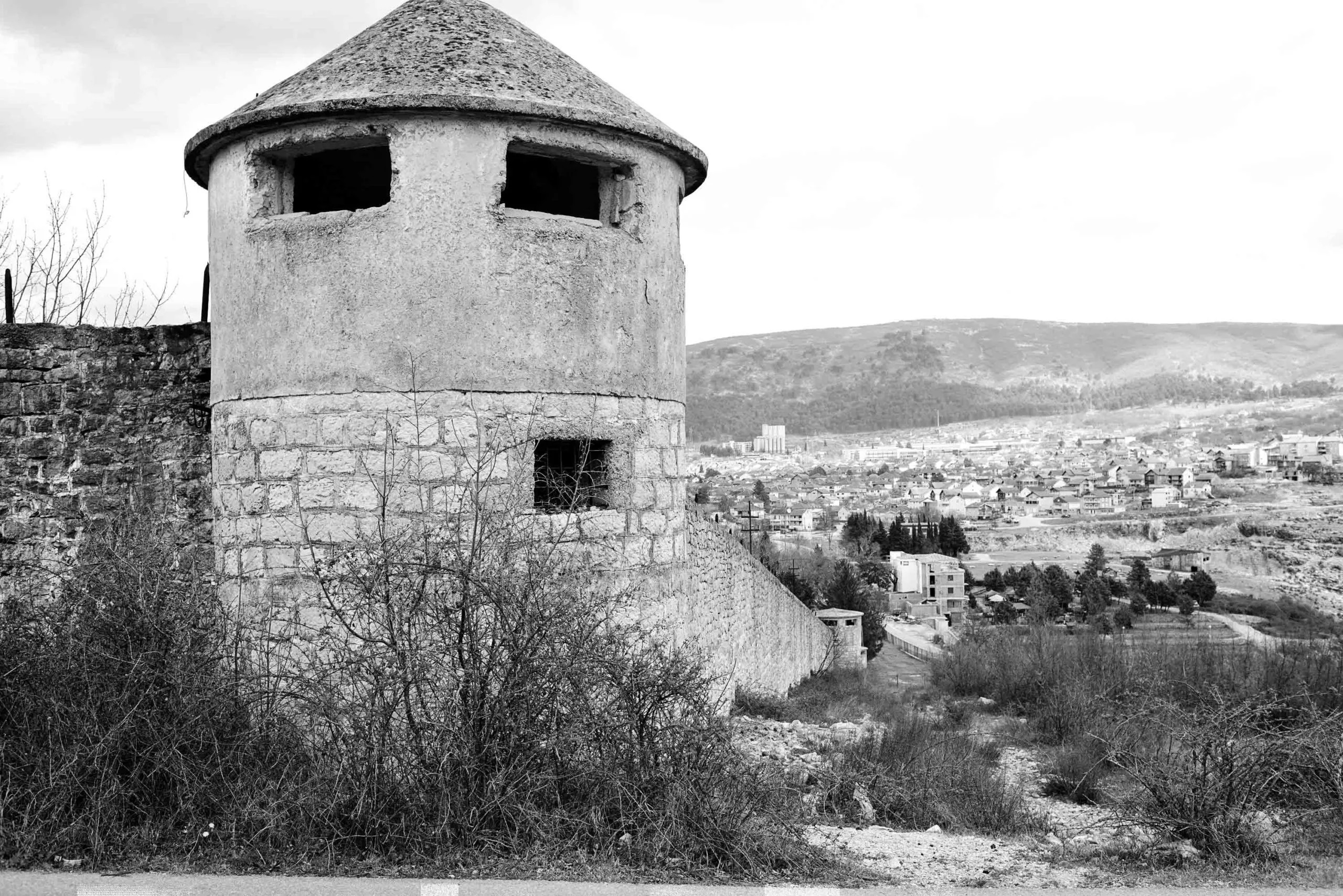
Barracks Moša Pijade
Srpske vojske bb, 89230 Bileća