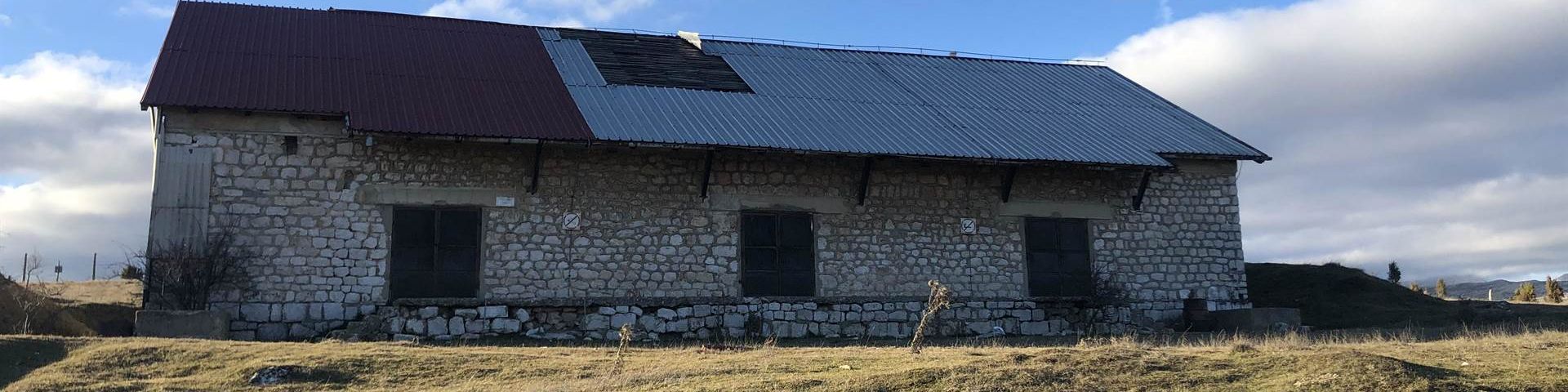
Gunpowder warehouse
Jelašačko polje bb, 71230 Kalinovik1992
The gunpowder warehouse of the Yugoslav People’s Army in Jelašačko Polje near Kalinovik was converted into a detention facility in 1992. Many residents of Kalinovik and surrounding villages were abused in the gunpowder warehouse, while others were taken away and incinerated.
Court facts
ICTY
In May 1992, Bosniaks in Kalinovik had to have permission from the crisis headquarters to move freely. When the Serb armed forces declared the municipality a war zone on June 11,1992, the movement of the Bosniak population was further restricted. (para. 662. Krajišnik, p. 242.), (para. 796. Mladić, vol. I, p. 405.)
In 1992, Serb authorities held civilians, mostly Bosniaks, in Kalinovik in several detention centres (the police building, the Miladin Radojević Elementary School, the gunpowder warehouse, and the Pavlovac agricultural estate). (paras. 663., 665., 666. Krajišnik, pp. 242-243.)
At the beginning of July 1992, the detainees were transferred to the Jelašačko Polje gunpowder warehouse, where about a hundred Bosniak men were detained until the beginning of August and where many detainees were severely beaten. (para. 663. Krajišnik, p. 242), (paras. 778., 780. Mladić, volume I, p. 398.)
At the beginning of August 1992, Serb soldiers called out about 25 detained Bosniaks and, accompanied by the police, took them to the village of Ratine, near Jeleč in the area of Foča, where they abused them and shot all but one of them. The soldiers then burned the bodies of those killed. (para. 663. Krajišnik, pp. 242-243.), (para. 752. Mladić, volume I, p. 387.)
Court of Bosnia and Herzegovina
In Kalinovik, the Miladin Radojević Elementary School was used as a detention facility until September 1992. Bosniak residents from this municipality, as well as from the municipalities of Gacko, Nevesinje, Foča, and Trnovo, were detained there. (Ratko Bundalo et al., pp. 57, 153), (paras. 103-105. Slavko Lalović, pp. 22-23), (paras. 169-184. Zoran Bjelica and Novica Tripković, pp. 35-37.)
The men detained in the school were then transferred to the gunpowder warehouse. (paras. 79-80. Milan Perić et al. second instance verdict, pp. 30-31.)
Around 60 Bosniak men from Mjehovina, Jelašac and Vihovići were arrested at the end of June 1992 and detained in the gymnasium of the Miladin Radojević Elementary School, after which they were transferred to the gunpowder warehouse in early July 1992. (Ratko Bundalo et al., pp. 3, 93-102.), (paras. 163-166. Krsto Savić second instance judgment, pp. 6, 69-70.), (para. 126. Milan Perić et al. second instance judgment, p. 43.)
The women, children, and the elderly were taken first to the gunpowder warehouse and then to the Miladin Radojević Elementary School. (para. 180, second-instance judgment of Milan Perić et al., p. 55.)
In the gunpowder warehouse, the Bosniak male civilian population was detained in inhumane conditions, without basic hygiene requirements, and they were taken to do forced labour and to the front lines, as well as being physically abused and eventually killed. (Ratko Bundalo et al., pp. 6, 183-187, 190-196), (paras. 36-64. Đorđislav Aškraba second-instance judgment, pp. 3-4, 12-16.)
In early August 1992, four detainees from the gunpowder warehouse were taken in the direction of Rogoj to dig up the bodies of Serb soldiers. The men were found dead in the Rogoj area on the same day. (Ratko Bundalo et al., pp. 6, 192-194), (para. 41-50. Đorđislav Aškraba second-instance judgment, pp. 13-14.)
At least 12 detainees from the gunpowder warehouse were taken to Mehka brda in early August and killed. The bodies of some of them were exhumed after the war. (Ratko Bundalo et al., pp. 6, 196-201.), (paras. 51-60. Đorđislav Aškraba second instance verdict, pp. 3-4, 14-16.)
During the same period, at least 24 detainees from this warehouse were taken out of a truck in the town of Ratine and taken to the Tuzlakove štale location, where they were killed, thrown into a building, and set on fire. One detainee managed to survive. (Ratko Bundalo et al., pp. 6-7, 201-209.), (paras. 51-64, Đorđislav Aškraba second-instance judgment, pp. 14-17.)
The remaining trucks with prisoners from the warehouse continued their journey towards Miljevina, and the remaining prisoners were killed at the Tuneli site. After the war at least 33 bodies were found and exhumed, while six are still listed as missing. (Ratko Bundalo et al., pp. 6-7, 201-209.), (paras. 51-64, Đorđislav Aškraba second-instance judgment, pp. 14-17.)
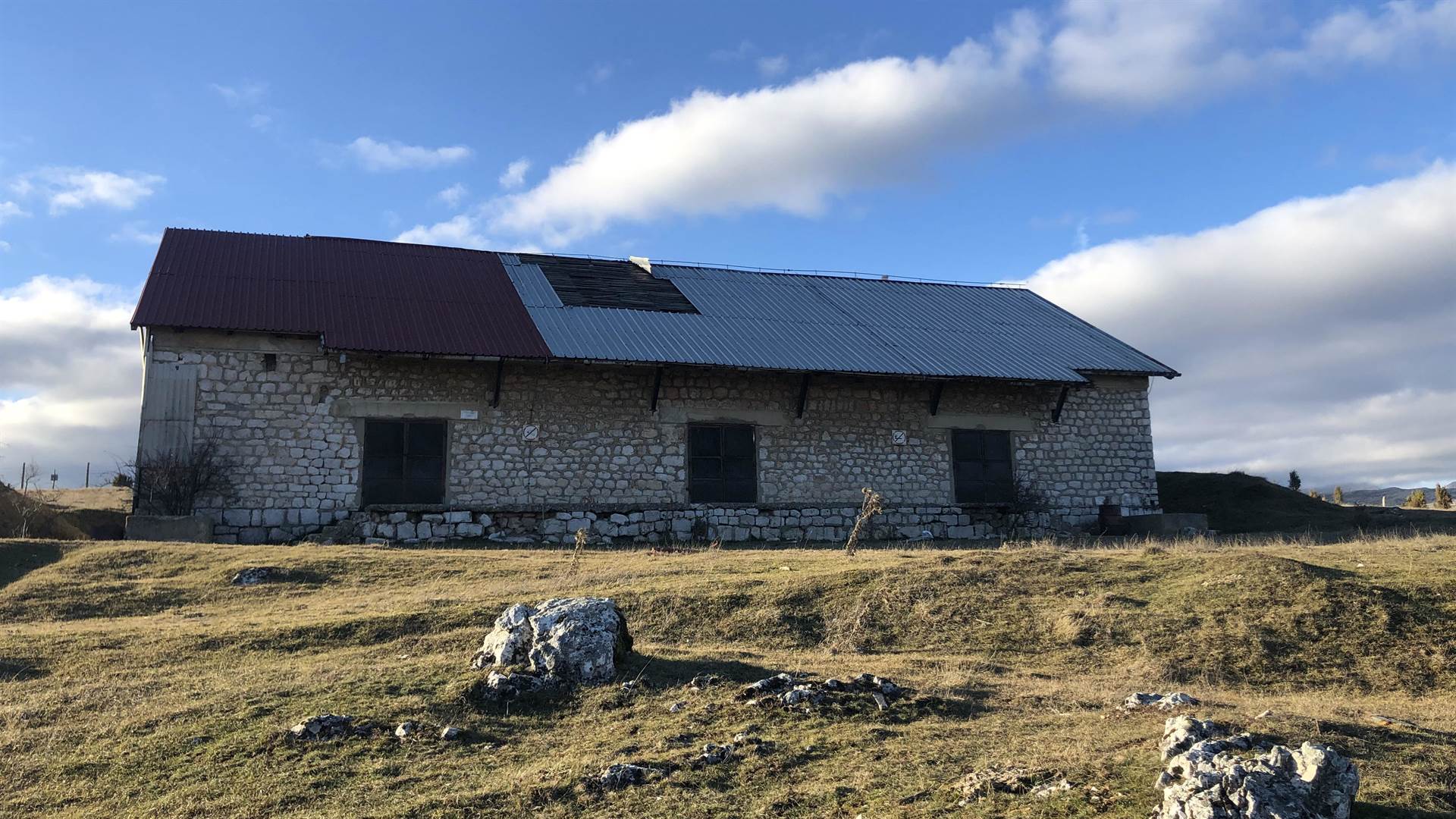
For Jasna Hadžić, the “Barutni Magacin” camp in Kalinovik is associated with the last embrace she shared with her father, Esad. He was one of dozens of detainees who were killed and whose remains have never been found. Three decades after the war, she hopes that instead of a mural glorifying war criminal Ratko Mladić, her hometown will one day build a memorial to the victims.
Jasna Hadžić — “Barutni Magacin”, KalinovikRelated content

Gunpowder warehouse
Jelašačko polje bb, 71230 Kalinovik